How Much Does It Cost to Build a Crypto Wallet App in 2026?
A practical breakdown of crypto wallet development costs: features, custodial vs non-custodial, blockchains, security and realistic budget ranges.
"How much will it cost?" is the first question almost every founder asks us about a crypto wallet. The honest answer is that it depends on a handful of decisions you make early. Get those right and you can launch a secure, polished wallet on a sensible budget. Get them wrong and you pay twice.
This guide walks through those decisions, what each one costs, and the budget ranges we typically see.
The biggest decision: custodial or non-custodial?
Non-custodial (self-custody) wallets keep the private keys on the user's device. You never hold user funds, which keeps regulatory exposure lower and makes the product simpler to operate. The engineering effort goes into secure key generation and storage, seed-phrase backup and recovery, and signing transactions on the device.
Custodial wallets hold keys on your servers, like an exchange account. Users get familiar logins and password resets, but you take on much more: secure key management (HSMs or MPC), withdrawal approvals, KYC/AML, monitoring and, in most markets, a licence.
Rule of thumb: if you don't plan to be a regulated financial business, start non-custodial.
Our work on BiorVault, a non-custodial wallet with multi-chain swaps and portfolio tracking, is a good example of how far a self-custody product can go without holding user funds.
Which blockchains will you support?
Every chain adds work:
- EVM chains (Ethereum, Polygon, BNB Chain, Arbitrum) share tooling, so adding a second EVM network is relatively cheap.
- Bitcoin, Solana, Tron and others each need their own libraries, address formats, fee models and testing.
- Tokens (ERC-20 such as USDT and USDC) are cheap to add once the chain itself is supported.
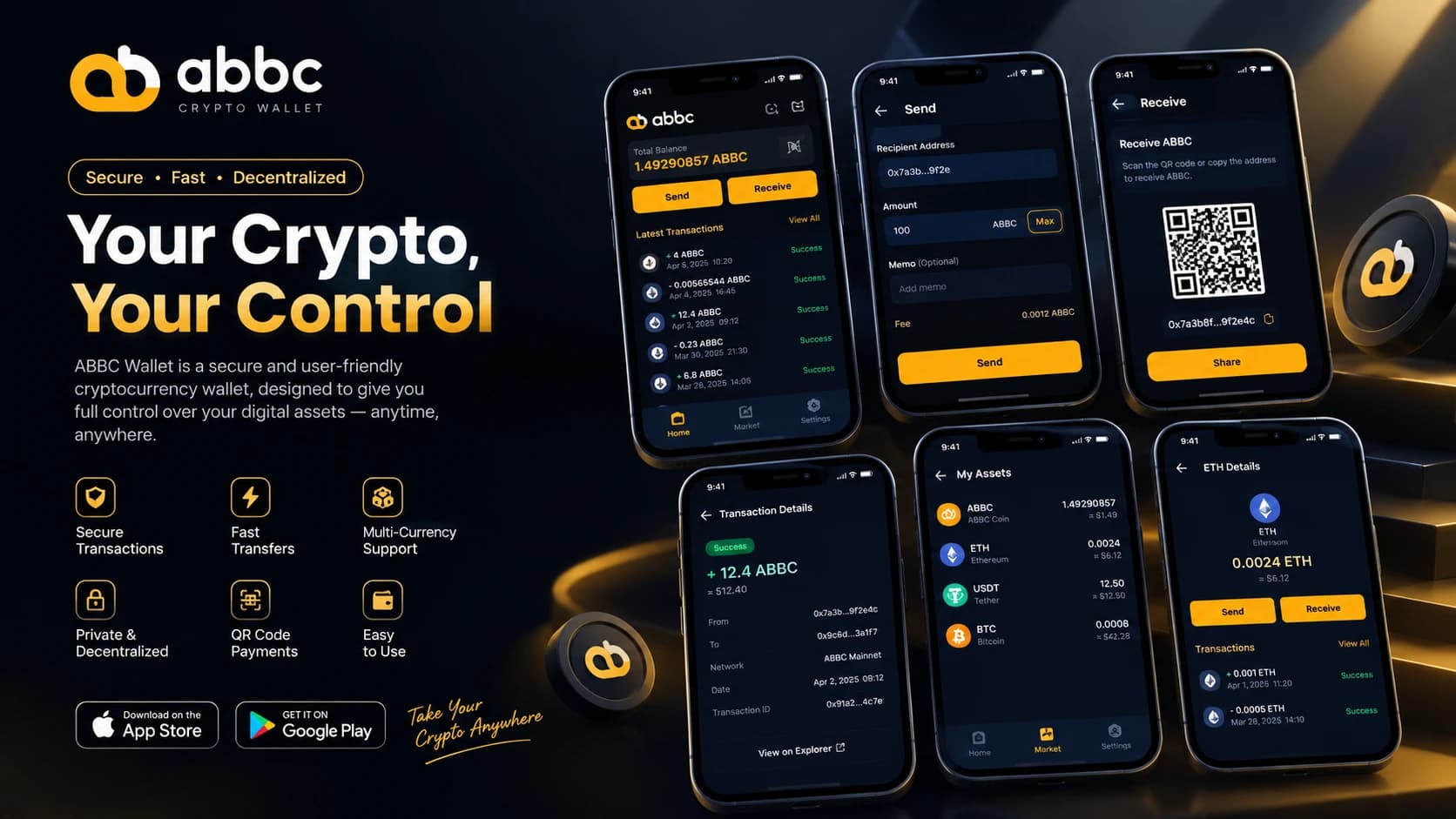
You can either query public RPC providers or run your own nodes. For ABBC Wallet we deployed Bitcoin, Ethereum, Litecoin and PIVX nodes on AWS, which gives more control and reliability but adds infrastructure cost.
Core features (the MVP)
A solid first version usually includes:
- Create or import a wallet (seed phrase), with biometric or PIN lock
- Balances and token list with live prices
- Send and receive, including QR codes and address validation
- Transaction history and status
- Network fee estimation
- Push notifications for incoming transactions
Features that add cost
- In-app swaps through DEX aggregators or bridges
- Buy crypto with a card through an on-ramp partner
- Staking and yield features
- NFT gallery
- WalletConnect to use the wallet with dApps
- Price alerts and portfolio analytics
- Multi-account or multi-wallet support
Each of these is typically one to four weeks of work, depending on integrations.
Security is not optional
A wallet is a high-value target. Budget for:
- Secure key storage (Secure Enclave or Android Keystore)
- Protection against tampering and jailbroken devices
- An independent security audit before launch
- Smart contract audits if you deploy your own contracts
Skipping security to save money is the most expensive mistake you can make.
Realistic budget ranges
These are typical ranges for a professional build, including design, development, QA and launch support:
| Scope | Typical timeline | Typical budget |
|---|---|---|
| MVP: non-custodial, 1–2 chains, send/receive | 8–12 weeks | $20k – $45k |
| Full product: multi-chain, swaps, alerts, WalletConnect | 3–5 months | $45k – $100k |
| Custodial wallet or exchange-grade platform | 5–9+ months | $100k+ |
Costs vary with team location, the number of chains, and how much you integrate with third-party providers.
How to keep the cost under control
- Launch with one or two chains and add more once users ask.
- Use proven providers for on-ramps, swaps and node access instead of building them.
- Build cross-platform (React Native or Flutter) to ship iOS and Android from one codebase.
- Invest early in security, because fixing a breach costs far more than preventing one.
Next step
If you're planning a wallet, we'll happily review your feature list and give you an honest estimate. Book a free call or send us a project brief.