Fintech App Development: A Complete Guide for Startups
How to plan, build and launch a fintech app: product types, must-have features, compliance, tech stack, timelines and common mistakes to avoid.
Fintech apps are held to a higher standard than almost any other product. Users trust you with their money, regulators watch closely, and a single bug can cost real funds. The good news: with the right plan, a small team can launch a secure, compliant fintech product faster than most people expect.
Here's the approach we use when building payment, banking and investment apps.
1. Know what kind of fintech product you're building
Each category has its own rules and integrations:
- Payments and merchant apps such as QR payments and POS (Posify)
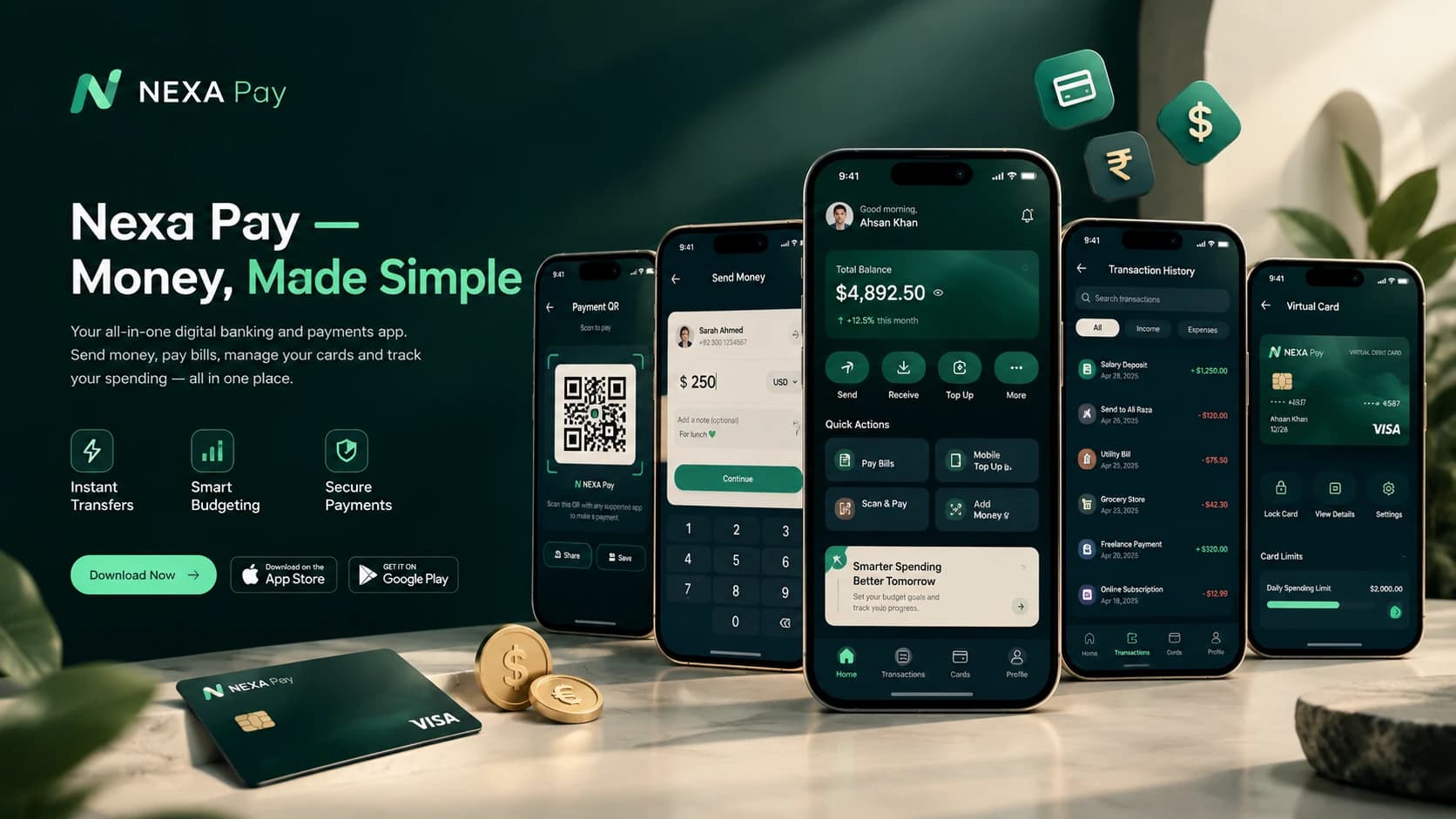
- Digital banking and wallets: transfers, bills, virtual cards (Nexa Pay)
- Investment and wealth apps: portfolios, watchlists, goals (Finora)
- Crypto exchanges and wallets (Zynex, BiorVault)
- B2B finance tools such as invoicing and compliance (Aspira)
- Lending, BNPL and remittance platforms
Being clear about the category tells you which licences, partners and features you'll need.
2. Decide what you build and what you partner for
Very few startups should build everything themselves. Common partners:
- Banking-as-a-Service providers for accounts and cards
- Payment gateways (Stripe, Adyen, local acquirers)
- KYC/AML providers for identity verification and screening
- Card issuing platforms for virtual and physical cards
- Market data providers for investment apps
Partnering gets you to market faster and moves much of the regulatory burden to licensed providers.
3. Must-have features
Most fintech apps need:
- Secure onboarding with KYC (ID document and selfie verification)
- Strong authentication: biometrics, PIN, device binding and 2FA
- Account balances and real-time transaction history
- Transfers, payments or trades with clear confirmations
- Notifications for every money movement
- In-app support and dispute handling
- An admin dashboard for operations, compliance and reporting
4. Compliance from day one
Regulation depends on your market, but these come up again and again:
- KYC/AML rules and transaction monitoring
- PCI DSS if you handle card data
- Data protection laws such as GDPR
- Open Banking / PSD2 in Europe and similar frameworks elsewhere
- Local central bank rules, for example the State Bank of Pakistan or UAE Central Bank requirements
Design your data model, audit logs and permissions with compliance in mind. Retrofitting them later is painful.
5. A proven tech stack
A typical modern fintech stack:
- Mobile: React Native or Flutter for iOS and Android from one codebase
- Web and admin: Next.js and React
- Backend: Node.js (NestJS) or Python, with PostgreSQL for financial records
- Infrastructure: AWS or Google Cloud, with encryption at rest and in transit
- Event streaming: Kafka or queues for reliable transaction processing
Use a double-entry ledger for balances. Never store a balance as a single number you overwrite.
6. Timeline and budget
| Phase | Typical duration |
|---|---|
| Discovery, compliance planning, UX | 2–4 weeks |
| MVP build (mobile, backend, admin) | 10–16 weeks |
| Security testing and audit | 2–4 weeks |
| Launch and stabilisation | 2–4 weeks |
A focused fintech MVP usually lands between $30k and $90k, depending on integrations and the number of platforms.
7. Mistakes we see most often
- Underestimating compliance, then rebuilding onboarding and data storage later.
- Weak ledger design that leads to balance mismatches.
- Too many features at launch instead of one excellent core flow.
- No admin tools, so operations teams can't handle refunds, disputes or reviews.
- Skipping a security audit before going live.
Ready to build?
We've built payment platforms, digital banking apps, investment products and crypto exchanges. If you're planning a fintech product, book a free call and we'll help you scope it properly.